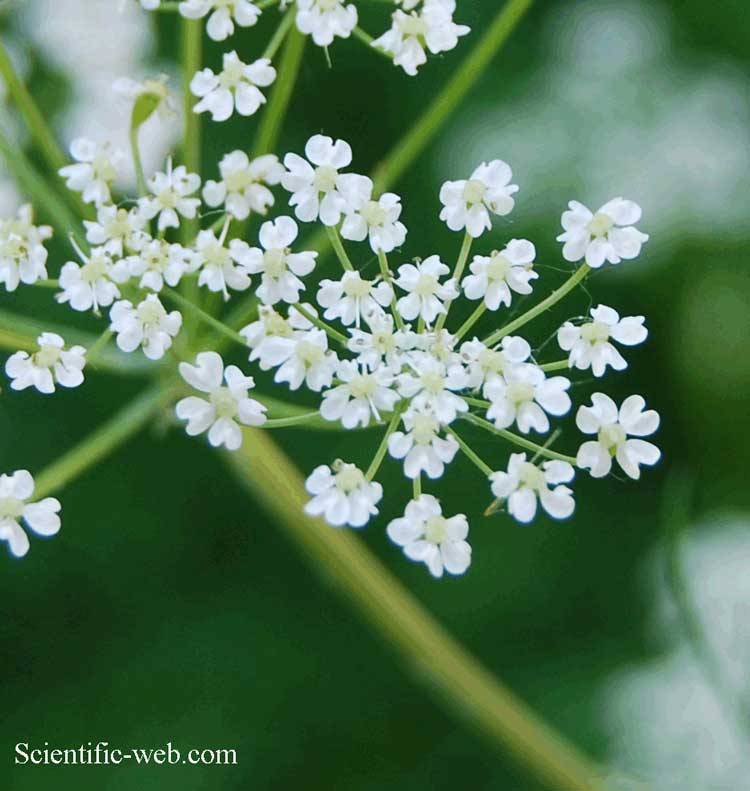
Carum carvi, Photo: Michael Lahanas
Classification System: APG IV
Superregnum: Eukaryota
Regnum: Plantae
Cladus: Angiosperms
Cladus: Eudicots
Cladus: Core eudicots
Cladus: Asterids
Cladus: Campanulids
Ordo: Apiales
Familia: Apiaceae
Subfamilia: Apioideae
Tribus: Careae
Genus: Carum
Species: Carum carvi
Subspecies: C. c. subsp. carvi – C. c. subsp. rosellum
Name
Carum carvi L., 1753
References
Linnaeus, C. 1753. Species Plantarum. Tomus I: 263. Reference page.
Links
Hassler, M. 2018. Carum carvi. World Plants: Synonymic Checklists of the Vascular Plants of the World In: Roskovh, Y., Abucay, L., Orrell, T., Nicolson, D., Bailly, N., Kirk, P., Bourgoin, T., DeWalt, R.E., Decock, W., De Wever, A., Nieukerken, E. van, Zarucchi, J. & Penev, L., eds. 2018. Species 2000 & ITIS Catalogue of Life. Published online. Accessed: 2018 Aug. 22. Reference page.
International Plant Names Index. 2018. Carum carvi. Published online. Accessed: Aug. 22 2018. Reference page.
The Plant List 2013. Carum carvi in The Plant List Version 1.1. Published online. Accessed: 2018 Aug. 22.
Tropicos.org 2018. Carum carvi. Missouri Botanical Garden. Published online. Accessed: 22 Aug. 2018.
USDA, ARS, Germplasm Resources Information Network. Carum carvi in the Germplasm Resources Information Network (GRIN), U.S. Department of Agriculture Agricultural Research Service. Accessed: 08-Apr-12.
Vernacular names
aragonés: Alcaraveya
العربية: كراويا, كروياء, كراوية
azərbaycanca: Adi zirə
беларуская: Кмен звычайны
български: ким
বাংলা: কারোয়া
བོད་ཡིག: གོ་སྙོད།
bosanski: Kim
català: Alcaravia, Matafaluga borda, Comí de prat, Càrvit
čeština: kmín kořenný, kmín luční
Cymraeg: Carwy
dansk: Kommen
Deutsch: Kümmel, Wiesenkümmel, Gemeiner Kümmel, Echter Kümmel
dolnoserbski: Garba
ދިވެހިބަސް: ފަރިހި ދަމުއި
Ελληνικά: Άγριο κύμινο (ágrio kýmino)
English: Caraway, Persian Cumin
Esperanto: Karvio
español: alcarabaca, alcarahueya, alcaravea, alcarovea, alcarravea, alcorobea, caros, carvía, carvi, carvia, comino, comino de prado, comino de prados, hinojo de prado
eesti: Harilik köömen
euskara: Txarpoil
فارسی: زیره, زیرهٔ سیاه, زیره سیاه
suomi: Kumina
Nordfriisk: Köömen, Bruadkrüüs, Seeskrüüs
français: Carvi, Anis des Prés, Faux Anis, Anis des Vosges, Cumin des Prés, Graine de carvi, Caraway
Gaeilge: Cearbhas
galego: Carvea
עברית: כוויה תרבותית, כרוויה תרבותית, קימל
hrvatski: Kim
hornjoserbsce: Kimjelčka
magyar: fűszerkömény, keménymag, köménymag, kömény mag, konyhakömény, kerti kömény, hasznos kömény
հայերեն: քիմիոն
Bahasa Indonesia: Jintan
íslenska: Kúmen
italiano: Carvi o cumino dei prati, Carvi
日本語: キャラウェイ, 姫茴香, ヒメウイキョウ
ქართული: ძირა
한국어: 캐러웨이
kurdî: Jaj
lietuvių: Paprastasis kmynas, Kmynas, Kmynai, Carum
latviešu: Pļavas ķimene
македонски: ким
മലയാളം: കരിഞ്ചീരകം, Caraway, കരിം ജീരകം
मराठी: शहाजिरे
Bahasa Melayu: Jintan
မြန်မာဘာသာ: ကရဝေး
norsk bokmål: karve, kummin, Kummin
Nederlands: Karwij, Karwijzaad, Echte karwij
norsk nynorsk: Karve
norsk: Karve, Kummin
polski: Kminek Zwyczajny
پښتو: زيره
português do Brasil: alcaravia
português: alcaravia, alcarávia
română: Chimen
русский: Тмин, Тмин обыкновенный
саха тыла: Анньыыс
srpskohrvatski / српскохрватски: Kim
slovenčina: rasca lúčna, rasca, kmín
slovenščina: Kumina, Navadna kumina
shqip: Qimnoni
svenska: Kummin, Brödkummin
ไทย: เทียนตากบ
Türkçe: Karaman kimyonu, Frenk kimyonu
українська: Кмин звичайний
vèneto: Cumo, Kumo
中文: 葛縷子, 藏茴香

Caraway, also known as meridian fennel and Persian cumin (Carum carvi), is a biennial plant in the family Apiaceae, native to western Asia, Europe, and North Africa.[1][2]
Caraway fruits, informally called "seeds"
Caraway seedsNutritional value per 100 g (3.5 oz)
Energy 1,390 kJ (330 kcal)
Carbohydrates
49.90 g
Sugars 0.64 g
Dietary fiber 38.0 g
Fat
14.59 g
Saturated 0.620 g
Monounsaturated 7.125 g
Polyunsaturated 3.272 g
Protein
19.77 g
Vitamins and minerals
Other constituents Quantity
Water 9.87 g
Link to USDA Database entry
†Percentages estimated using US recommendations for adults,[3] except for potassium, which is estimated based on expert recommendation from the National Academies.[4]
Etymology
The etymology of "caraway" is unclear. Caraway has been called by many names in different regions, with names deriving from the Latin cuminum (cumin), the Greek karon (again, cumin), which was adapted into Latin as carum (now meaning caraway), and the Sanskrit karavi, sometimes translated as "caraway", but other times understood to mean "fennel".[5] English use of the term caraway dates to at least 1440, possibly having Arabic origin.[5][6]
Description
The plant is similar in appearance to other members of the carrot family, with finely divided, feathery leaves with thread-like divisions, growing on 20–30 cm (8–12 in) stems. The main flower stem is 30–60 cm (12–24 in) tall, with small white or pink flowers in compound umbels composed of 5–16 unequal rays 1–6 cm (0.4–2.4 in) long. Caraway fruits, informally called seeds, are smooth, crescent-shaped, laterally compressed achenes, around 3 mm (1⁄8 in) long, with five pale ridges and a distinctive pleasant smell when crushed.[7] It flowers in June and July.[7]
History
Caraway was mentioned by the early Greek botanist Pedanius Dioscorides as a herb and tonic. It was later mentioned in the Roman Apicius as an ingredient in recipes.[8] Caraway was known in the Arab world as karawiya, and cultivated in Morocco.[8]
Cultivation
The only species that is cultivated is Carum carvi, its fruits being used in many ways in cooking and in the preparation of medicinal products and liqueurs.[9]
The plant prefers warm, sunny locations and well-drained soil rich in organic matter. [10] In warmer regions, it is planted in the winter as an annual. In temperate climates, it is planted as a summer annual or biennial.[1]
It is widely established as a cultivated plant. The Netherlands, Poland and Germany are the top caraway producers.[11] Finland supplies about 28% (2011) of the world's caraway production from some 1500 farms, the high output occurring possibly from its favorable climate and latitudes, which ensure long summer hours of sunlight.[12]
Nutrition
Caraway seeds are 10% water, 50% carbohydrates, 20% protein, and 15% fat (table). In a 100 grams (3.5 oz) reference amount, caraway seeds are a rich source (20% or more of the Daily Value, DV) of protein, B vitamins (24–33% DV), vitamin C (25% DV), and several dietary minerals, especially iron (125% DV), phosphorus (81% DV), and zinc (58% DV) (table).
Phytochemicals
When ground, caraway seeds yield up to 7.5% of volatile oil, mostly S-carvone, and 15% fixed oil of which the major fatty acids are oleic, linoleic, petroselinic, and palmitic acids.[13]
Phytochemicals identified in caraway seed oil include thymol, o-cymene, γ‑terpinene, trimethylene dichloride, β-pinene, 2-(1-cyclohexenyl), cyclohexanone, β-phellandrene, 3-carene, α-thujene, and linalool.[13]
Uses v
Caraway
This section needs additional citations for verification. Please help improve this article by adding citations to reliable sources in this section. Unsourced material may be challenged and removed.
Find sources: "Caraway" – news · newspapers · books · scholar · JSTOR (September 2023) (Learn how and when to remove this message)
The fruits, usually used whole, have a pungent, anise-like flavor and aroma that comes from essential oils, mostly carvone, limonene, and anethole.[14] Caraway is used as a spice in breads, especially rye bread.[15] A common use of caraway is whole as an addition to rye bread – often called seeded rye or Jewish rye bread (see Borodinsky bread). Caraway seeds are often used in Irish soda bread and other baked goods.
Caraway may be used in desserts, liquors, casseroles, and other foods. Its leaves can be added to salads, stews, and soups, and are sometimes consumed as herbs, either raw, dried, or cooked, similar to parsley. The root is consumed as a winter root vegetable in some places, similar to parsnips.[15]
Caraway fruits are found in diverse European cuisines and dishes, for example sauerkraut, and the United Kingdom's caraway seed cake. In Austrian cuisine, it is used to season beef and, in German cuisine, pork. In Hungarian cuisine, it is added to goulash, and in Norwegian cuisine and Swedish cuisine, it is used for making caraway black bread.[15]
Caraway oil is used to for the production of Kümmel liquor in Germany and Russia, Scandinavian akvavit, and Icelandic brennivín.[15] Caraway can be infused in a variety of cheeses, such as havarti and bondost to add flavor. In Latvian cuisine, whole caraway seeds are added to the Jāņi sour milk cheese. In Oxford, where the plant appeared to have become naturalised in a meadow, the seeds were formerly offered on a tray by publicans to people who wished to disguise the odour of their drinker's breath.[16]
References
"North Carolina State Extension Gardener Plant Toolbox: Carum Carvi". North Carolina State University.
"Caraway". Word Crops Database. Retrieved February 16, 2016.
United States Food and Drug Administration (2024). "Daily Value on the Nutrition and Supplement Facts Labels". FDA. Archived from the original on March 27, 2024. Retrieved March 28, 2024.
"TABLE 4-7 Comparison of Potassium Adequate Intakes Established in This Report to Potassium Adequate Intakes Established in the 2005 DRI Report". p. 120. In: Stallings, Virginia A.; Harrison, Meghan; Oria, Maria, eds. (2019). "Potassium: Dietary Reference Intakes for Adequacy". Dietary Reference Intakes for Sodium and Potassium. pp. 101–124. doi:10.17226/25353. ISBN 978-0-309-48834-1. PMID 30844154. NCBI NBK545428.
Katzer's Spice Pages: Caraway Caraway (Carum carvi L.)
Walter William Skeat, Principles of English Etymology, Volume 2, page 319. 1891 Words of Arabic Origin
Tutin TG. 1980. Umbellifers of the British Isles. BSBI Handbook No. 2. ISBN 0-90-115802-X
Pickersgill, Barbara (2005). Prance, Ghillean; Nesbitt, Mark (eds.). The Cultural History of Plants. Routledge. p. 157. ISBN 0415927463.
Tomanová, Eliška (1998). Wild Flowers. Prague, Czech Republic: Aventinum Nakladatelství. p. 113. ISBN 978-1-84067-046-2.
"Fragrant and Beautiful Herbs for Your Sunny Garden". The Spruce. Retrieved June 1, 2022.
Peter, K.V. (2012). Handbook of herbs and spices Volume 2. p. 229.
"Finland a Global Leader in Caraway Exports". FinnFacts. April 22, 2013. Archived from the original on April 19, 2014. Retrieved April 19, 2014.
Peter, K.V., ed. (2012). Handbook of Herbs and Spices, Volume 2. Woodhead Publishing Limited. p. 226. ISBN 978-0-85709-039-3.
María D. López; María J. Jordán; María J. Pascual-Villalobo (2008). "Toxic compounds in essential oils of coriander, caraway and basil active against stored rice pests". Journal of Stored Products Research. 44 (3): 273–278. doi:10.1016/j.jspr.2008.02.005.
Rodale's Illustrated Encyclopedia of Herbs
Mabey R. 1996. Flora Britannica. Sinclair-Stevenson ISBN 1-85-619377-2
Retrieved from "http://en.wikipedia.org/"
All text is available under the terms of the GNU Free Documentation License