Fine Art

Pinus heldreichii

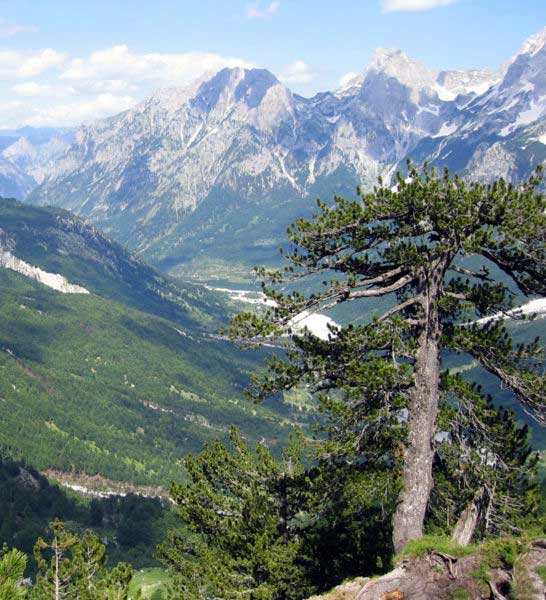
Pinus heldreichii (Information about this image)

Life-forms

Superregnum: Eukaryota
Regnum: Plantae
Divisio: Tracheophyta
Divisio: Pinophyta
Classis: Pinopsida
Ordo: Pinales

Familia: Pinaceae
Genus: Pinus
Subgenus: P. subg. Pinus
Sectio: P. sect. Pinus
Subsectio: P. subsect. Leucodermes
Species: Pinus heldreichii
Name

Pinus heldreichii Christ, Verh. Naturf. Ges. Basel, n.s., 3: 549 (1863).
Synonyms

Homotypic
Pinus laricio var. heldreichii (Christ) Mast., Gard. Chron., ser. 3: 21: 740 (1884).
Heterotypic
Pinus leucodermis Antoine, Oesterr. Bot. Z. 14: 366 (1864).
Pinus laricio var. leucodermis (Antoine) Christ, Flora 50: 81 (1867).
Pinus heldreichii var. leucodermis (Antoine) Markgr. ex Fitschen in L.Beissner, Handb. Nadelholzk. ed. 3: 404 (1930).
Pinus nigra var. leucodermis (Antoine) Rehder in L.H.Bailey, Stand. Cycl. Hort.: 2641 (1916).
Pinus heldreichii subsp. leucodermis (Antoine) A.E.Murray, Kalmia 13: 23 (1983).
Pinus pindica Formánek, Deutsche Bot. Monatsschr. 8: 68 (1890).
Pinus laricio var. pindica (Formánek) Mast., Gard. Chron. ser 3, 31: 302 (1902).
Pinus heldreichii var. pancicii Fukarek, God. Biol. Inst. Sarajevu 4(1): 41. 1951.
Pinus heldreichii f. vivipara Tucović & Stilinović, Naucni Skup. Srpske Akad. Nauka Umetnosti 1: 5. (1974).

Distribution
Native distribution areas:

Europe
Southeastern Europe
Albania, Bulgaria, Greece, Italy, former Yugoslavia.

References: Brummitt, R.K. 2001. TDWG – World Geographical Scheme for Recording Plant Distributions, 2nd Edition
References
Primary references

Christ, K.H.H. 1863. Uebersicht der Europäischen Abietineen (Pinus Linn.). Verhandlungen der Naturforschenden Gesellschaft in Basel 3(4): 541–557. BHL Reference page.

Additional references

Richardson, D.M. (ed.). 1998. Ecology and Biogeography of Pinus. xvii + 527 pp. Cambridge University Press, Cambridge. ISBN 0-521-55176-5. Reference page.
Businský, R. 2008. The genus Pinus L., pines: contribution to knowledge. A monograph with cone drawings of all species of the world by Ludmila Businská. Acta Pruhoniciana 88: 1–126. PDF (Text) Photos 1–32 Photos 33–42 Figures 1–73Reference page.
Farjon, A. 2010. A Handbook of the World's Conifers. 2 vols., pp. 1–526 + 527–1111, Koninklijke Brill, Leiden, Boston. ISBN 978-90-04-17718-5. Reference page.

Links

Caković, D., Gargano, D., Matevski, V. & Shuka, L. 2017. Pinus heldreichii. The IUCN Red List of Threatened Species 2017. IUCN Red List Category: Least Concern . DOI: 10.2305/IUCN.UK.2017-2.RLTS.T42368A95725658.en.
Govaerts, R. et al. 2023. Pinus heldreichii in Kew Science Plants of the World Online. The Board of Trustees of the Royal Botanic Gardens, Kew. Published online. Accessed: 2023 March 12. Reference page.
International Plant Names Index. 2023. Pinus heldreichii. Published online. Accessed: March 12 2023.
Hassler, M. 2023. World Plants. Synonymic Checklist and Distribution of the World Flora. . Pinus heldreichii. Accessed: 12 March 2023.
Hassler, M. 2023. Pinus heldreichii. World Plants: Synonymic Checklists of the Vascular Plants of the World In: Roskovh, Y., Abucay, L., Orrell, T., Nicolson, D., Bailly, N., Kirk, P., Bourgoin, T., DeWalt, R.E., Decock, W., De Wever, A., Nieukerken, E. van, Zarucchi, J. & Penev, L., eds. 2023. Species 2000 & ITIS Catalogue of Life. Published online. Accessed: 2023 March 12. Reference page.

Vernacular names
العربية: صنوبر بوسني
български: Черна мура
català: Pi de Bòsnia
čeština: Borovice Heldreichova
dansk: Slangebark-Fyr
Deutsch: Schlangenhaut-Kiefer
Ελληνικά: Ρόμπολο
English: Bosnian Pine
Esperanto: Balkana pino
español: Pino de los Balcanes
eesti: Soomusmänd
suomi: Bosnianmänty
français: Pin de Bosnie
hrvatski: Munika
italiano: Pino loricato
перем коми: Боснаись пожум
lietuvių: Baltažievė pušis
македонски: Муника
Nederlands: Bosnische den
norsk: Ormehamfuru
polski: Sosna bośniacka
slovenčina: Borovica pancierová
српски / srpski: Муника
удмурт: Босниысь пужым

Pinus heldreichii (synonym P. leucodermis; family Pinaceae), the Bosnian pine or Heldreich's pine,[2] is a species of pine native to mountainous areas of the Balkans and southern Italy.[3]
Description

It is an evergreen tree up to 25–35 metres (82–115 feet) in height, and 2 m (6+1⁄2 ft) in trunk diameter.

It is a member of the hard pine group, Pinus subgenus Pinus, with leaves ('needles') in fascicles (bundles) of two, with a persistent sheath. They are 4.5–10 centimetres (1+3⁄4–4 inches) long and 1.5–2 millimetres (1⁄16–3⁄32 in) thick. Cones are 5–9 cm (2–3+1⁄2 in) long, with thin, fragile scales; they are dark blue-purple before maturation, turning brown when ripe about 16–18 months after pollination. The 6–7 mm (1⁄4–9⁄32 in) long seeds have a 2–2.5 cm (3⁄4–1 in) wing and are wind-dispersed.

Longevity

A tree in Northern Greece was dated as 1,075 years old in 2016.[4]

What is believed to be the oldest known living tree in Europe has been discovered in a remote mountainous area of the Pollino National Park in southern Italy. It is a Heldreich's pine estimated at 1,230 years. Much of its core has turned to dust, but there is enough new growth to confirm it is still alive.[2]

A notable specimen in the Pirin Mountains of Bulgaria, known as Baikushev's pine, is 24 m (79 ft) tall, 2.2 m (7 ft 3 in) in diameter, and is estimated to be over 1300 years old.[5]
Nomenclature

The species was first described as Pinus heldreichii by the Swiss botanist K. Hermann Christ in honour of Theodor von Heldreich in 1863 from specimens collected on Mount Olympus, and then described a second time as P. leucodermis in 1864; the author of the second description (the Austrian botanist F. Antoine who found it on Orjen above the Bay of Kotor in Montenegro) being unaware of the slightly earlier publication by Christ. Some minor morphological differences have been claimed between the two descriptions (leading to the maintenance of both as separate taxa by a few botanists), but this is not supported by modern studies of the species, which show that both names refer to the same taxon. The discrepancies in the descriptions are largely due to Christ's cone specimens being immature and shrunken after drying, having been collected in July, four months before maturity.
Distribution

It can be found in the mountains of Bosnia and Herzegovina, Montenegro, Croatia, southwestern Bulgaria, Albania, North Macedonia, Kosovo, northern Greece (Valia Kalda, Smolikas and Vasilitsa, Mount Olympus and in other high mountains), and locally in southern Italy (it is the symbol of the Pollino National Park), growing at 1,500–2,500 m (4,900–8,200 ft) altitude. It reaches the alpine tree line in these areas.
Cultivation and uses

Bosnian pine is a popular ornamental tree in parks and large gardens, giving reliable, steady, though not fast, growth on a wide range of sites, and with a very neat, conical crown. It is also noted for its very decorative purple cones. The cultivars ‘Smidtii’[6] and ‘Compact Gem’[7] have been given the Royal Horticultural Society's Award of Garden Merit.[8] It is hardy down to at least −45 °C (−49 °F), and tolerant of severe wind exposure. Many in cultivation are still grown under the name Pinus leucodermis or Pinus heldreichii var. leucodermis.

P. heldreichii is able to adapt to extreme environmental conditions and is also a great colonizer. It is resistant to sulphur dioxide, hydrogen fluoride, nitrogen dioxide and ozone pollution and is further able to withstand wind, ice and heavy snow. These abilities makes it suitable for reforestation of extensive dry and high-altitude areas. In the south of Italy it is planted because it is less susceptible to pests than other pine species.[9]

The wood of the tree species is very aromatic, containing several types of monoterpenes and diterpenes, noticeably limonene, and thus is commonly utilised in the Balkans for making wine barrels[10] for white wines.

References

Caković, D.; Gargano, D.; Matevski, V.; Shuka, L. (2017). "Pinus heldreichii". IUCN Red List of Threatened Species. 2017: e.T42368A95725658. doi:10.2305/IUCN.UK.2017-2.RLTS.T42368A95725658.en. Retrieved 12 November 2021.
Ceurstemont, Sandrine (25 May 2018). "Oldest European Tree Found—And It's Having a Growth Spurt". National Geographic. Archived from the original on September 21, 2021. Retrieved 17 February 2022.
Coniferous forests; Folke Andersson; 2005; p.138
New Scientist magazine issue 27th Aug 2016 page 7
"Байкушевата мура – най-старото иглолистно дърво в България | Географ.БГ". 22 July 2015.
"RHS Plantfinder - Pinus heldreichii 'Smidtii'". Retrieved 2 May 2018.
"RHS Plantfinder - Pinus heldreichii 'Compact Gem'". Retrieved 2 May 2018.
"AGM Plants - Ornamental" (PDF). Royal Horticultural Society. July 2017. p. 78. Retrieved 2 May 2018.
Vendramin, G.; Fineschi, S. & Fady, B. (2008), Bosnian pine - Pinus heldreichii syn. Pinus leucodermis: Technical guidelines for genetic conservation and use (PDF), EUFORGEN: European Forest Genetic Resources Programme, p. 6 p, archived from the original (PDF) on 2016-12-20, retrieved 2016-10-04

Graikou, K.; Gortzi, O.; Mantanis, G.; Chinou, I. (2012). "Chemical composition and biological activity of the essential oil from the wood of Pinus heldreichii Christ. var. leucodermis". European Journal of Wood and Wood Products. 70 (5): 615–620. doi:10.1007/s00107-012-0596-9. ISSN 0018-3768.

Literature
Simone Morris (2017) Pini Loricati nella nebbia | ISBN 9781389798900
Simone Morris (2018) Loricati in the fog | ASIN B07H5CQ4WG
Businský, R. Beitrag zur Taxonomie und Nomenklatur von Pinus heldreichii. Vol. 79. Mitt. Deutsch. Dendrol. Ges. pp. 91–106.
Farjon, A. (2005). Pines. Drawings and Descriptions of the genus Pinus (2nd ed.). Brill. ISBN 90-04-13916-8.

Plants, Fine Art Prints

Plants Images

Biology Encyclopedia

Retrieved from "http://en.wikipedia.org/"
All text is available under the terms of the GNU Free Documentation License

Home - Hellenica World