
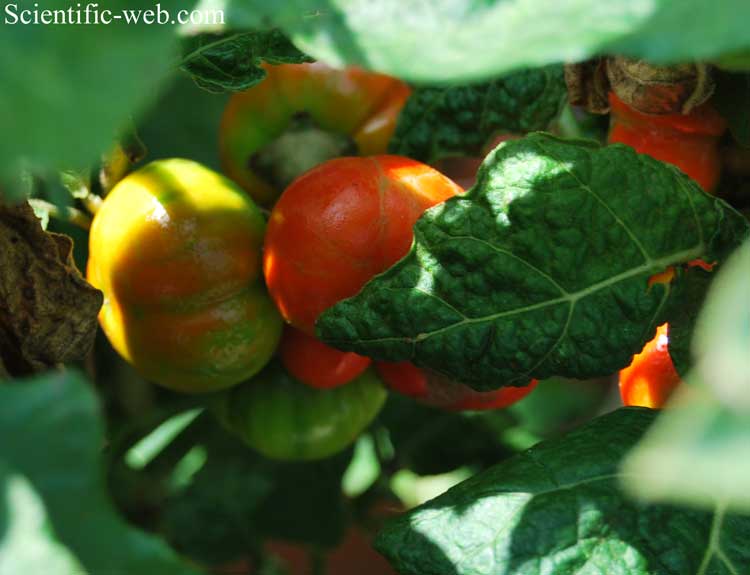
Solanum viride, Photo: Michael Lahanas
Classification System: APG IV
Superregnum: Eukaryota
Regnum: Plantae
Cladus: Angiosperms
Cladus: Eudicots
Cladus: Core eudicots
Cladus: Asterids
Cladus: Lamiids
Ordo: Solanales
Familia: Solanaceae
Subfamilia: Solanoideae
Tribus: Solaneae
Genus: Solanum
Species: Solanum viride
Name
Solanum viride Spreng.
References
J. F. T. Biehler, Pl. nov. herb. Spreng. 14. 1807
USDA, ARS, Germplasm Resources Information Network. Solanum viride in the Germplasm Resources Information Network (GRIN), U.S. Department of Agriculture Agricultural Research Service. Accessed: 09-Oct-10.
Solanum viride, the green nightshade, garland berry, cannibal's tomato, poroporo or boro dina, is a species of flowering plant in the family Solanaceae.[2] It is native to a number of south Pacific Islands, and has been introduced to Hawaii.[1][3] In Fiji at the time of contact, human meat was cooked wrapped in its leaves, and a condiment for the meal was made from the fruit.[4]
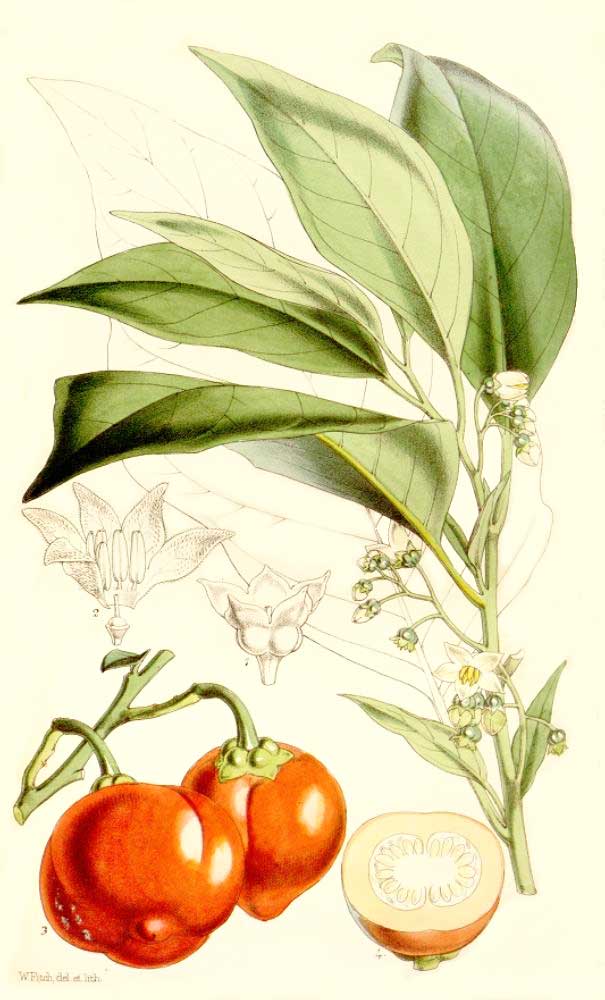
Solanum viride
References
"Solanum viride G.Forst. ex Biehler". Plants of the World Online. Royal Botanic Gardens, Kew. Retrieved 6 December 2021.
"Solanum viride Spreng. Taxonomic Serial No.: 505274". itis.gov. Integrated Taxonomic Information System (ITIS). Retrieved 6 December 2021.
"Solanum viride Uporo Group boro dina". The Royal Horticultural Society. 2021. Retrieved 6 December 2021.
"Solanum viride Garland Berry Polopuka / Poro'iti (cv.)". Cook Islands Biodiversity Database. The Cook Islands Natural Heritage Trust. July 2007. Retrieved 6 December 2021.
Retrieved from "http://en.wikipedia.org/"
All text is available under the terms of the GNU Free Documentation License
