Art Prints

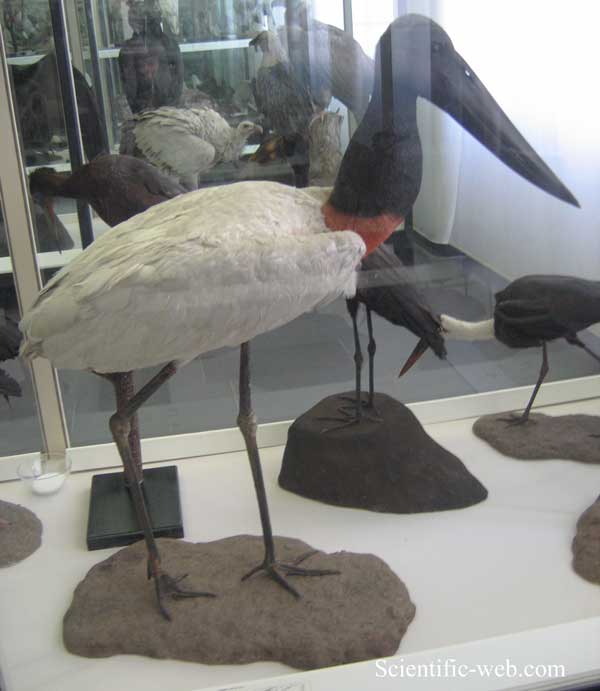
Jabiru mycteria, Photo: Michael Lahanas

Life-forms

Superregnum: Eukaryota
Cladus: Unikonta
Cladus: Opisthokonta
Cladus: Holozoa
Regnum: Animalia
Subregnum: Eumetazoa
Cladus: ParaHoxozoa
Cladus: Bilateria
Cladus: Nephrozoa
Superphylum: Deuterostomia
Phylum: Chordata
Cladus: Olfactores
Subphylum: Vertebrata
Infraphylum: Gnathostomata
Megaclassis: Osteichthyes
Cladus: Sarcopterygii
Cladus: Rhipidistia
Cladus: Tetrapodomorpha
Cladus: Eotetrapodiformes
Cladus: Elpistostegalia
Superclassis: Tetrapoda
Cladus: Reptiliomorpha
Cladus: Amniota
Cladus: Sauropsida
Cladus: Reptilia
Cladus: Eureptilia
Cladus: Romeriida
Subclassis: Diapsida
Cladus: Neodiapsida
Cladus: Sauria
Cladus: Archelosauria
Cladus: Archosauromorpha
Cladus: Crocopoda
Cladus: Archosauriformes
Cladus: Eucrocopoda
Cladus: Archosauria
Cladus: Avemetatarsalia
Cladus: Ornithodira
Cladus: Dinosauromorpha
Cladus: Dinosauriformes
Cladus: Dracohors
Cladus: Dinosauria
Cladus: Saurischia
Cladus: Theropoda
Cladus: Neotheropoda
Cladus: Averostra
Cladus: Tetanurae
Cladus: Avetheropoda
Cladus: Coelurosauria
Cladus: Tyrannoraptora
Cladus: Maniraptoromorpha
Cladus: Maniraptoriformes
Cladus: Maniraptora
Cladus: Pennaraptora
Cladus: Paraves
Cladus: Eumaniraptora
Cladus: Avialae
Subclassis: Aves
Cladus: Avebrevicauda
Cladus: Pygostylia
Cladus: Ornithothoraces
Cladus: Ornithuromorpha
Cladus: Carinatae
Cladus: Neornithes
Infraclassis: Neognathae
Cladus: Neoaves
Cladus: Aequornithes
Ordo: Ciconiiformes

Familia: Ciconiidae
Genus: Jabiru
Species: Jabiru mycteria
Name

Jabiru mycteria (Lichtenstein, 1819)
Synonymy

Ciconia mycteria (protonym)

References

Abhandlungen der physikalischen (-mathematischen) Klasse der Koeniglich-Preussischen Akademie der Wissenschaften (1816-1817): 163.

Vernacular names
বাংলা: জ্যাবিরু
català: Jabirú americà
čeština: Čáp jabiru
dansk: Jabiru
Deutsch: Jabirustorch
English: Jabiru
español: Jabirú americano
suomi: Jabiru
français: Jabiru d'Amérique
magyar: Jabiru
հայերեն: Ջաբիրու
Bahasa Indonesia: Jabiru
íslenska: Jöfurstorkur
italiano: Jabirù
日本語: ズグロハゲコウ
한국어: 검은머리황새
Nederlands: Jabiroe
norsk: Jabirustork
polski: Żabiru amerykański
português: Tuiuiú
Runa Simi: Wachapa
română: Jabiru american
русский: Бразильский ябиру
srpskohrvatski / српскохрватски: Žabiru
српски / srpski: Жабиру
svenska: Jabirustork
Türkçe: Jabiru
українська: Ябіру неотропічний
Tiếng Việt: Hạc cổ phồng
中文: 裸頸鸛

The jabiru (/ˌdʒæbɪˈruː/ or /ˈdʒæbɪruː/; Jabiru mycteria) is a large stork found in the Americas from Mexico to Argentina, except west of the Andes. It sometimes wanders into the United States, usually in Texas, but has also been reported in Mississippi, Oklahoma and Louisiana.[3][4] It is most common in the Pantanal region of Brazil and the Eastern Chaco region of Paraguay. It is the only member of the genus Jabiru. The name comes from the Tupi–Guaraní language and means "swollen neck".[5]
Taxonomy

Hinrich Lichtenstein described the jabiru in 1819. The name jabiru has also been used for two other birds of a distinct genus: black-necked stork (Ephippiorhynchus asiaticus), commonly called "jabiru" in Australia; and sometimes also for the saddle-billed stork (Ephippiorhynchus senegalensis) of Sub-Saharan Africa. In particular, Gardiner's Egyptian hieroglyph G29, believed to depict an E. senegalensis, is sometimes labeled "jabiru" in hieroglyph lists. The Ephippiorhynchus is believed to be the jabiru's closest living cousin, indicating an Old World origin for the species.[6]

The proposed Late Pleistocene fossil stork genus Prociconia from Brazil might actually belong in Jabiru. A fossil species of jabiru was found in the early Pliocene Codore Formation near Urumaco, Venezuela, and named Jabiru codorensis.[7]

In Portuguese, the bird is called tuiuiu, tuim-de-papo-vermelho ("red-necked tuim", in Mato Grosso) and cauauá (in the Amazon Basin). The name jabiru is used for the wood stork (Mycteria americana).
Description

The jabiru is the tallest flying bird found in South America and Central America, often standing nearly the same height as the flightless and thus much heavier greater rhea. For the continent, it also has the second largest wingspan, after the Andean condor (that is, excluding the great albatross occasionally found off the coast of southern South America).[6] The adult jabiru is 120–140 cm (47–55 in) long, 2.3–2.8 m (7.5–9.2 ft) across the wings, and can weigh 4.3–9 kg (9.5–19.8 lb).[6] Sexual dimorphism is high, possibly the highest of any stork, with males being about 25% larger than females. Males weigh an average of 6.89 kg (15.2 lb) whereas females weigh an average of 5.22 kg (11.5 lb).[8] Large males may stand as tall as 1.53 m (5.0 ft). The beak, which measures 25–35 cm (9.8–13.8 in), is black and broad, slightly upturned, ending in a sharp point. Among other standard measurements, the tail measures 20–25 cm (7.9–9.8 in), the tarsus measures 28.5–39 cm (11.2–15.4 in) long and the wing chord measures 58.5–73 cm (23.0–28.7 in).[6] The plumage is mostly white, but the head and upper neck are featherless and black, with a featherless red stretchable patch at the base.[9] The sexes are similar in appearance but the male is larger, which can be noticeable when the sexes are together. While it can give the impression of being an ungainly bird on the ground, the jabiru is a powerful and graceful flier.
Life history
Food and feeding habits

The jabiru lives in large groups near rivers and ponds and eats prodigious quantities of frogs, fish, snakes, snails, insects, and other invertebrates.[10] It will even eat fresh carrion and dead fish, such as those that die during dry spells, and thus help maintain the quality of isolated bodies of water. They feed in flocks and usually forage by wading in shallow water. Jabirus detect prey more through tactile sensation than vision. They feed by holding their open bill at a 45-degree angle to the water. When prey is contacted, the storks close their bill, draw it out of the water, and throw their head back to swallow.[11] Fish around 8 to 20 cm (3.1 to 7.9 in) are typically taken, though larger fish weighing up to at least 500 g (1.1 lb) and eels up to 80 cm (31 in) can be taken.[12][13] It is an opportunistic feeder. In one instance, when house mice experienced a population explosion in an agricultural area, several hundred jabirus could be seen in each field feeding on the rodents (unusual for a bird that's rarely seen in large numbers anywhere).[6] On rare occasions, jabirus have been seen attempting to kleptoparasitize the two smaller storks it co-exists with, the wood and maguari storks.[6]
Breeding
Jabiru with chicks at the nest

Jabirus are solitary nesters, building massive nest platforms that are used repeatedly in successive seasons. Unlike many other storks, these species are often seen in pairs in the nonbreeding season, suggesting a lifelong pair bond.[14] The nest of sticks is built by both parents around August–September (in the Southern Hemisphere) on tall trees, and enlarged at each succeeding season, growing to several meters in diameter. Nests are often deeper than they are wide; they can be up to 1 m (3.3 ft) wide and 1.8 m (5.9 ft) deep.[11] Half a dozen nests may be built in close proximity, sometimes among nests of herons and other birds. The parents take turns incubating the clutch of two to five white eggs and are known to be more territorial than usual against other jabirus during the breeding period. Raccoons and other storks (including their own species) are occasional predators of jabiru eggs, but most nest predators appear to avoid these huge-billed birds and there are no known predators of healthy adult jabirus.[11] Although the young fledge around 110 days old, they often spend around another 3 months in the care of their parents. Because of this long length of time spent brooding, pairs have difficulty breeding in successive years. Less than half of active pairs in one season are active the next season. Only 25% of successful pairs are successful the next season. The lifespan average is 36 years.[11] The Jabiru has a diploid number of 2n = 56.[15]
Conservation

Jabirus are widespread but not abundant in any area. They are considered a species of least concern by the IUCN, an improvement from a status of near threatened in 1988.[1] Jabiru gained protected status in Belize in 1973. Since then, their numbers in that area have slowly risen. They have been granted protected status by the U.S. Migratory Bird Act.[11]
Gallery

Pair on nest, in the Pantanal, Brazil
A moment before flying on Laguna Oca, Formosa, Argentina
In flight over the Pantanal, Brazil

References

BirdLife International (2021). "Jabiru mycteria". IUCN Red List of Threatened Species. 2021: e.T22697710A163624043. doi:10.2305/IUCN.UK.2021-3.RLTS.T22697710A163624043.en. Retrieved 20 February 2022.
"Appendices | CITES". cites.org. Retrieved 2022-01-14.
Steven L. Hilty; William L. Brown (1986). A Guide to the Birds of Colombia. Princeton University Press. p. 72. ISBN 9780691083728.
Steve N. G. Howell; Ian Lewington; Will Russell (2014). Rare Birds of North America. Princeton University Press. p. 211. ISBN 9780691117966.
Wildlife of the World. Dorling Kindersley Ltd. 2015. p. 103. ISBN 9780241247143.
Hancock & Kushan, Storks, Ibises and Spoonbills of the World. Princeton University Press (1992), ISBN 978-0-12-322730-0
Walsh, S. A.; Sánchez, R. (2008). "The first Cenozoic fossil bird from Venezuela". Paläontologische Zeitschrift. 82 (2): 105–112. Bibcode:2008PalZ...82..105W. doi:10.1007/bf02988402. S2CID 129314392.
CRC Handbook of Avian Body Masses, 2nd Edition by John B. Dunning Jr. (Editor). CRC Press (2008), ISBN 978-1-4200-6444-5.
Thomas S. Schulenberg (2010). Birds of Peru: Revised and Updated Edition. Princeton University Press. p. 38. ISBN 9780691130231.
Kahl, M. P. (1971). "Observations on the Jabiru and Maguari storks in Argentina, 1969". The Condor. 73 (2): 220–229. doi:10.2307/1365842. JSTOR 1365842.
ADW- Jabiru mycteria- Information (2011).
Thomas, Betsy Trent (1985). "Coexistence and behavior differences among the three western hemisphere storks". Ornithological Monographs (36): 921–931. doi:10.2307/40168325. JSTOR 40168325.
Del Hoyo, Josep, et al. Handbook of the birds of the world. Vol. 1. No. 8. Barcelona: Lynx edicions, 1992.
Kahl, M. P. (1973). "Comparative ethology of the Ciconiidae. Part 6. The blacknecked, saddlebill, and jabiru storks (genera Xenorhynchus, Ephippiorhynchus, and Jabiru)". The Condor. 75 (1): 17–27. doi:10.2307/1366532. JSTOR 1366532.
Seligmann ICA; Furo, I. O.; Dos Santos, M. S.; Tagliarini, M. M.; Araujo CCD; O'Brien PCM; Ferguson-Smith, M. A.; de Oliveira EHC (2019). "Comparative Chromosome Painting in Two Brazilian Stork Species with Different Diploid Numbers". Cytogenetic and Genome Research. 159 (1): 32–38. doi:10.1159/000503019. PMID 31542782. S2CID 202731184.

Birds, Fine Art Prints

Birds Images

Biology Encyclopedia

Retrieved from "http://en.wikipedia.org/"
All text is available under the terms of the GNU Free Documentation License

Home - Hellenica World